Paint Surface Quality: Q1–Q4 Levels and the Raking Light Test
"Make the paint good" describes nothing measurable. What is measurable is the surface quality level. The Q1-to-Q4 scale defines exactly where the work stops and what you are paying for — and that definition gets tested mercilessly by raking light.
Published: · Updated:
The four levels
The levels are defined for plasterboard and plaster surfaces, each adding labour on top of the one before. The difference is not material; it is how many filler coats go on and how the surface is sanded.
| Level | Work carried out | Where it is acceptable |
|---|---|---|
| Q1 | Joints and screw heads filled only | Surfaces never seen: behind units, plant rooms |
| Q2 | Joints plus levelling coat | Heavy wallpaper, coarse textured finishes |
| Q3 | Q2 plus a thin skim over the whole surface | Standard matt paint, normal lighting |
| Q4 | Full skim over everything plus fine sanding | Satin/gloss paint, raking light, large glazing |
Raking light: the real exam
What exposes a surface is not how much light there is but the angle. Light arriving parallel to the wall — the wall beside a wide window, a corridor wall-light, a downlight set close to the wall — draws a shadow beside every bump and every joint line.
The same surface can look flawless under general ceiling lighting and visibly wavy under raking light. That is not a painting fault; it is surface preparation that was insufficient for that lighting condition.
This is why the surface level should be decided after the lighting design is known. A concealed LED trough is brutal: because it washes the wall from close range, that wall almost always needs Q4.
The paint itself raises the level
The higher the sheen, the more the surface reflects, and the more it reflects the more it shows. Matt forgives; satin does not.
Matt emulsion looks good on a Q3 surface. If satin or semi-gloss has been specified, preparation has to be Q4 — otherwise waves appear under light and the paint brand usually takes the blame.
Dark colours behave the same way: a dark wall shows more than the identical wall in a pale shade.
- Matt, pale colour, ceiling lighting → Q3 is enough.
- Satin or dark colour → Q4.
- Concealed LED trough or a wall beside wide glazing → Q4.
- Heavy textured wallpaper → Q2 can be sufficient.
No preparation, no level
A surface level does not begin with filler; it begins with the primer and the state of the substrate. However much filler goes onto a dusty, absorbent or flaking surface, it will not hold.
The sequence is: clean the surface, strip failing paint where present, prime, filler coats, intermediate sanding, final sanding, prime again, two coats of paint. Skip the intermediate sanding and a claim of Q4 means nothing.
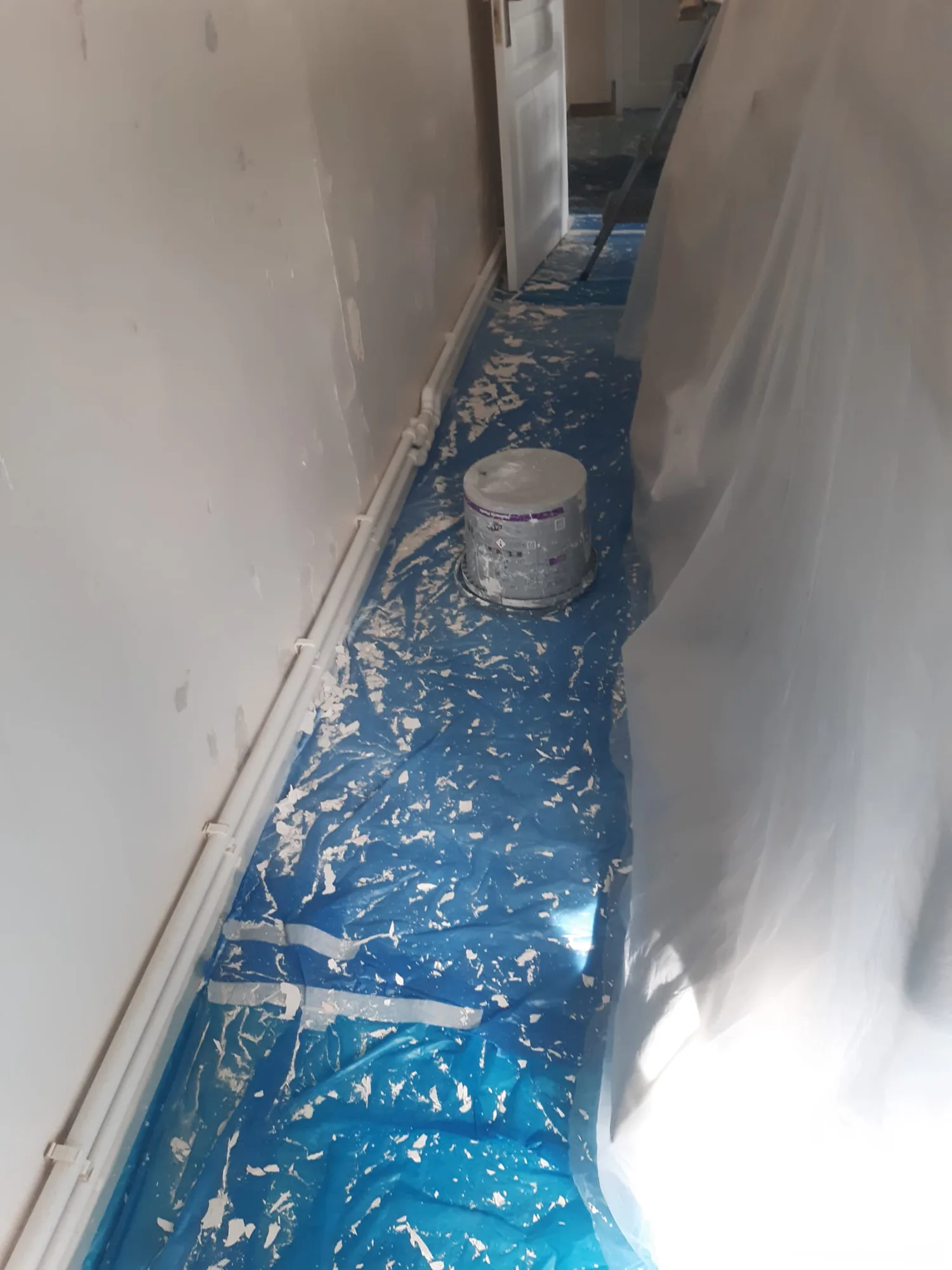
The light check belongs at the final sanding stage: a torch is held flat against the wall and the surface read at that angle. Flaws should be found then, not after painting.
In short
- Surface quality is measurable: it is defined from Q1 to Q4.
- It is the angle of light, not the amount, that exposes flaws — raking light shows everything.
- Satin and dark colours require Q4; matt pale colours work well at Q3.
- Any wall washed by a concealed LED trough is effectively a Q4 wall.
- Skip the primer or the intermediate sanding and no level claim survives.