What Sets the Price: How a Drywall and Ceiling Quote Is Built
There are no figures on this page, and that is deliberate. The "price per m²" lists you find online are not comparable, because none of them says which board, how many layers or what surface level they mean. What follows is how a quote is actually built, so you can compare two of them properly.
Published: · Updated:
Measurement first: which square metre?
Two contractors can measure the same room differently and both quote "per m²" while talking about entirely different numbers.
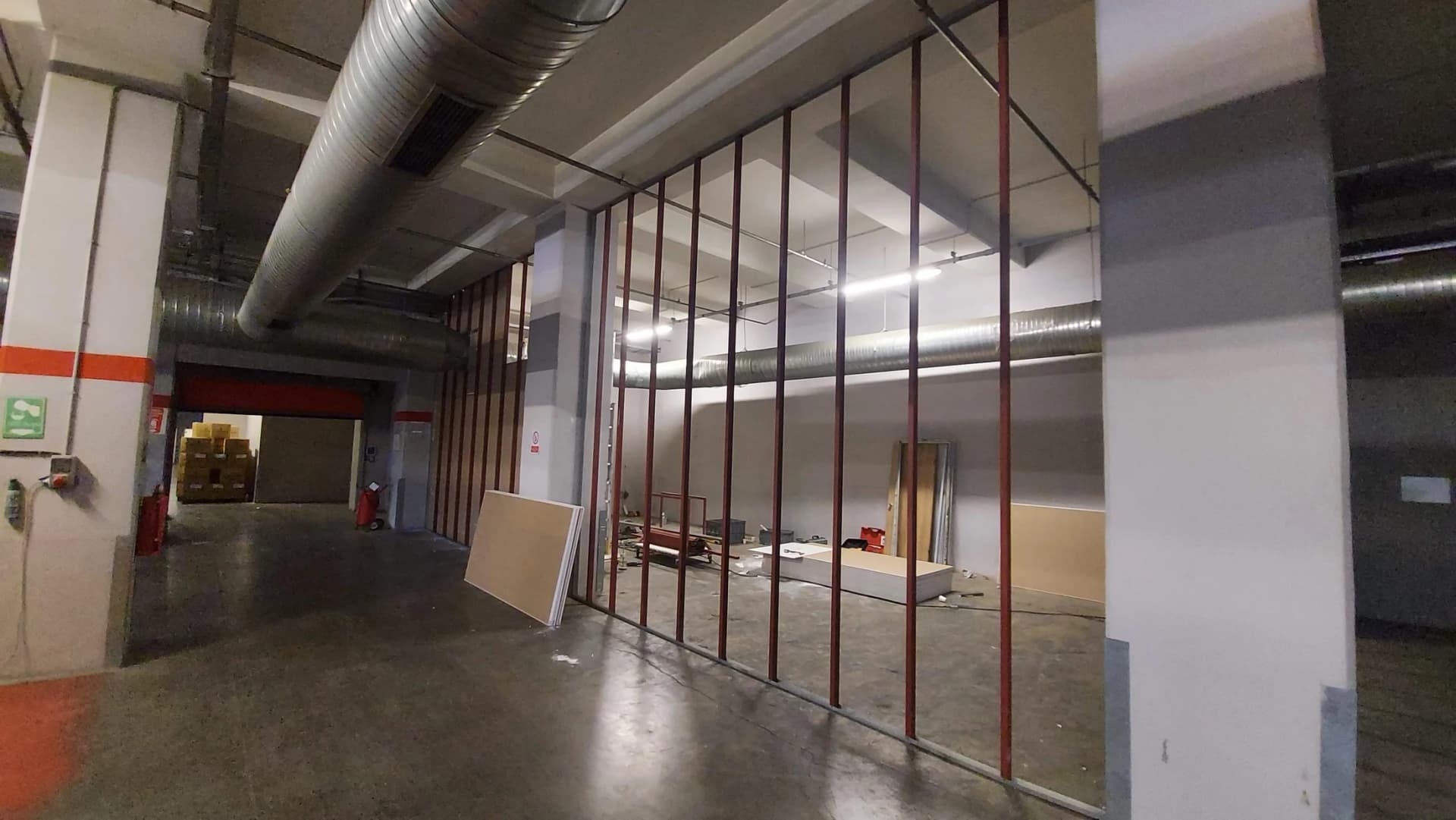
For a ceiling, the measure is the plan area — but on a stepped ceiling the vertical faces are counted separately. For a partition the measure is the system area, because both faces are boarded. In painting, whether door and window openings are deducted changes the total directly.
The first question to ask any quote is: how was this square-metre figure arrived at?
- Suspended ceiling: plan area, with step faces counted separately.
- Partition: system area — and does the height run to the slab or stop under the ceiling?
- Cornice: ceiling perimeter, in linear metres.
- Painting: net wall area; openings under 0.5 m² are usually not deducted.
Material class is the largest variable
The same job can be built with standard board, moisture-resistant board or fire-rated board — and the material line can differ several-fold between them.
The table below lists the choices that typically push cost up. It shows relative effect, not figures.
| Decision | Cost effect | When it is required |
|---|---|---|
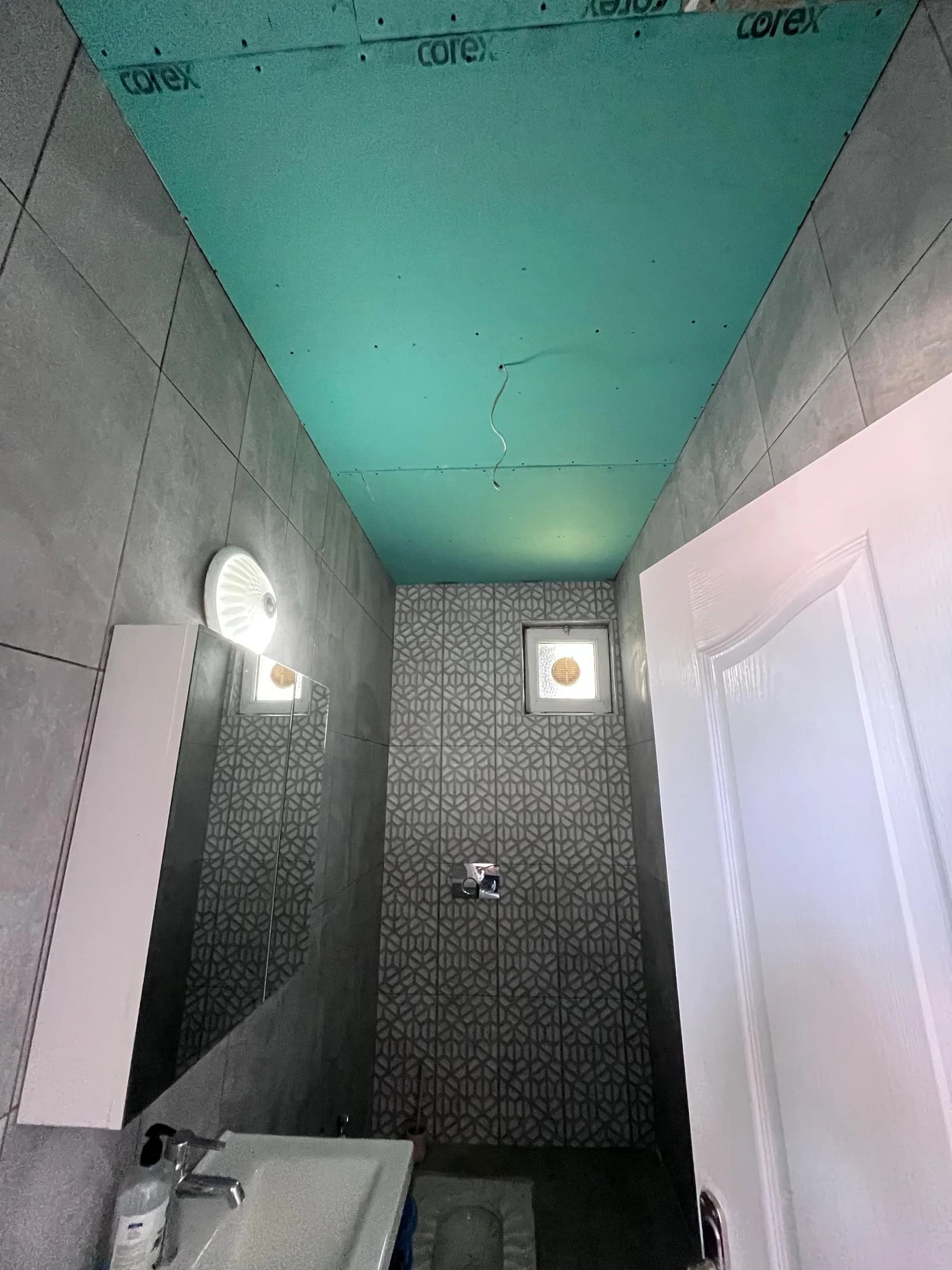
| Moisture-resistant instead of standard board | Medium | Bathroom, kitchen, enclosed balcony |
| Fire-rated board | High | Commercial space, escape corridor, plant room |
| Double instead of single boarding | High | Sound target above 45 dB |
| Mineral wool infill | Medium | Acoustic or fire requirement |
| Metal panel / stone wool ceiling | High | Service access, cleanability |
| Satin instead of matt paint | Low–medium | Where a wipeable finish is wanted |
Workmanship: same material, different result
The real difference in the labour line is how far the surface is taken. Filling joints only and skimming the whole surface then sanding it fine are very different amounts of work — and the difference is visible under raking light.
Detail density adds labour directly: curved surfaces, multi-level ceilings, concealed light troughs, tight niches and corner solutions all take several times longer than a flat plane.
- The surface quality level (Q1–Q4) should be readable from the quote.
- Curves, steps and light troughs should appear as separate items.
- How many coats of paint, and whether a primer is used, should be written down.
Site conditions
Two identical flats can be priced differently depending on the building. These are not arbitrary differences — each one changes how long the work takes.
| Condition | Why it matters |
|---|---|
| Upper floor without a lift | Material handling time and labour |
| Occupied home | Phased work, daily clear-down and protection |
| Building working-hour restrictions | Fewer productive hours per day |
| Stripping out an existing ceiling | A separate demolition and waste item |
| Poor existing substrate | Extra levelling and plaster work |
| High ceilings (over 3 m) | Scaffolding and access arrangements |
Exclusions — where quotes actually grow
Most surprises come from items that were never written in the quote. Do not compare quotes without asking about the following.
- Are electrical works and downlight installation included or separate?
- Does the scope include painting, or does the work stop at filler stage?
- Who handles strip-out and waste removal?
- Who supplies the light fittings?
- Is cleaning and post-handover touch-up included?
- Is the payment schedule and duration written in working days?
How we do it
We survey and measure on site at no charge. The quote then states in writing which rooms and surfaces are included, which system is built for each, the brand and product of the boards, the target surface quality level, the duration and the warranty scope.
We do not give a figure before the survey — because a number produced without seeing any of the six points above will have to change later.
In short
- A "price per m²" is only comparable once measurement method, board type and surface level are stated.
- Material class — moisture-resistant, fire-rated, double-boarded — is the biggest single variable.
- The labour difference usually comes from surface quality level, and it shows under raking light.
- Site conditions such as lifts, occupancy and ceiling height change duration, and therefore price.
- Check who carries electrics, painting, strip-out and waste removal.