Plaster Cornice or Foam Coving? The Real Differences
These products get sold as if they were interchangeable, and that is how people end up with the wrong one. The difference is not decorative — it is material and installation, and that difference decides lifespan, weight, moisture behaviour and how the profile handles concealed lighting.
Published: · Updated:
Definitions: not the same thing
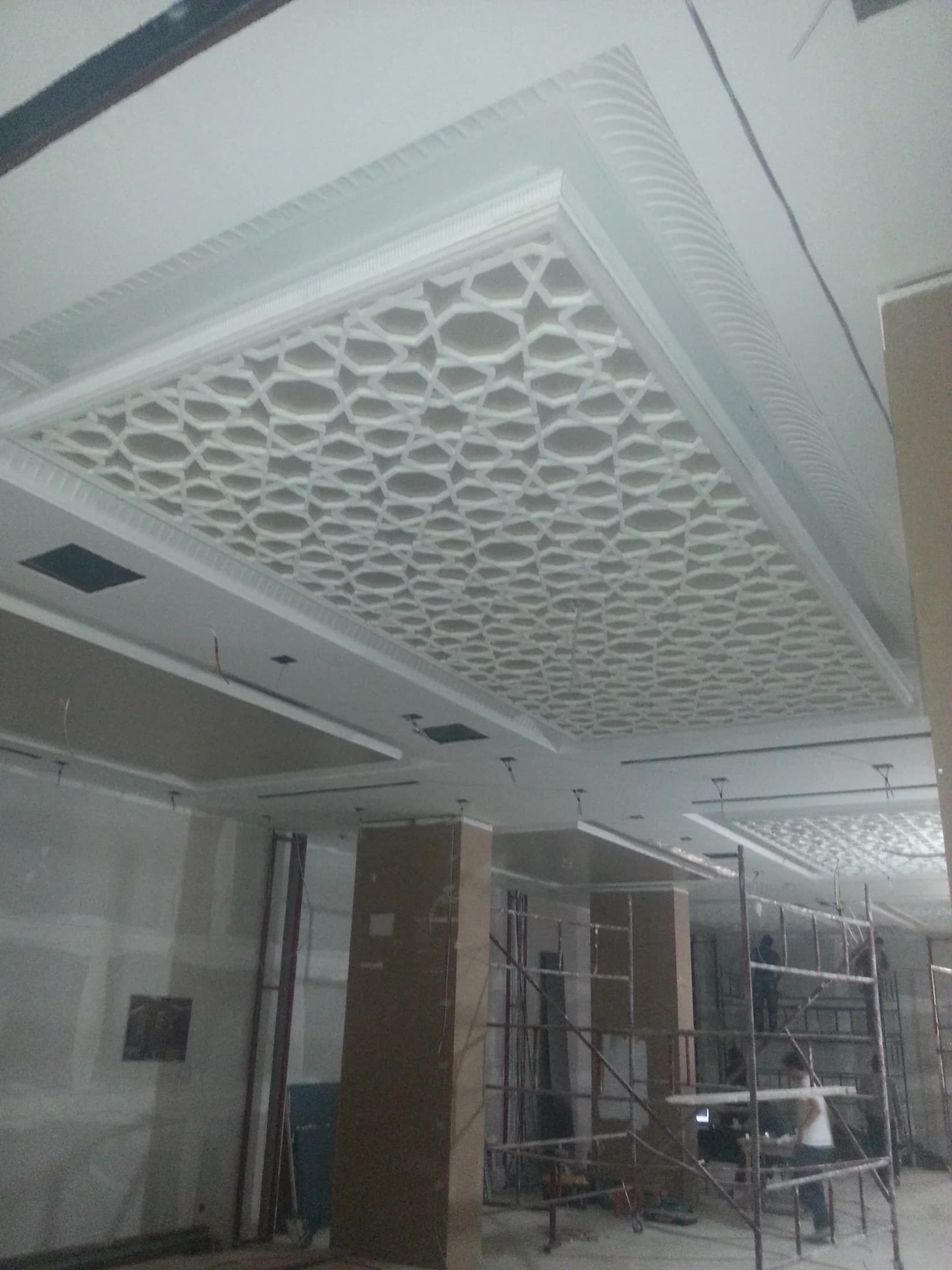
Plaster cornice is a gypsum-based profile cast in a mould. It is bedded onto the wall-to-ceiling junction or the ceiling with plaster, the joints are filled with plaster, and the surface becomes continuous.
Foam coving is cut from expanded polystyrene (EPS). It is fixed with a proprietary adhesive and the joints are filled with filler. It is often sold as "foam cornice", which is exactly where the confusion starts.
There is a third option: polyurethane (PU) moulding. It is light like foam but far denser and harder, and it resists impact and moisture markedly better.
Comparison
The table compares the three on the points that actually decide the choice.
| Property | Plaster cornice | EPS foam coving | Polyurethane |
|---|---|---|---|
| Weight | Heavy | Very light | Light |
| Impact resistance | Medium — brittle but hard | Low — a fingernail marks it | High |
| Detail crispness | High, classical profiles | Limited, soft edges | High |
| Joint invisibility | Disappears with a plaster joint | Filler joint can reappear over time | Good |
| Damp environments | Not suitable | Not suitable | Suitable |
| Reaction to fire | Good (gypsum does not burn) | Poor — EPS is combustible | Medium |
| Installation speed | Slow, wet trade | Very fast | Fast |
| Cost | High | Low | Medium–high |
| Painting afterwards | Required | Required | Required |
Concealed LED troughs: the choice narrows here
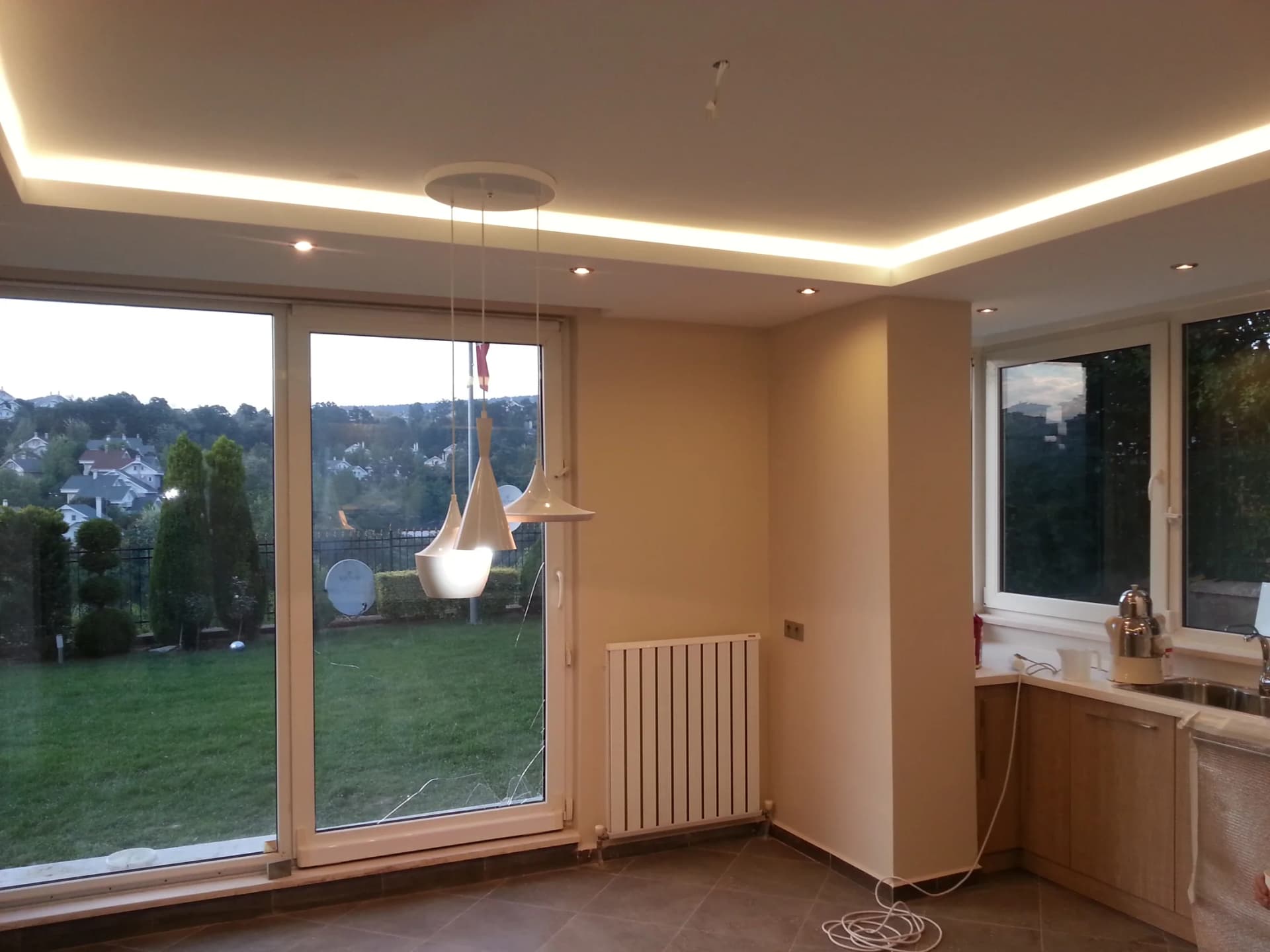
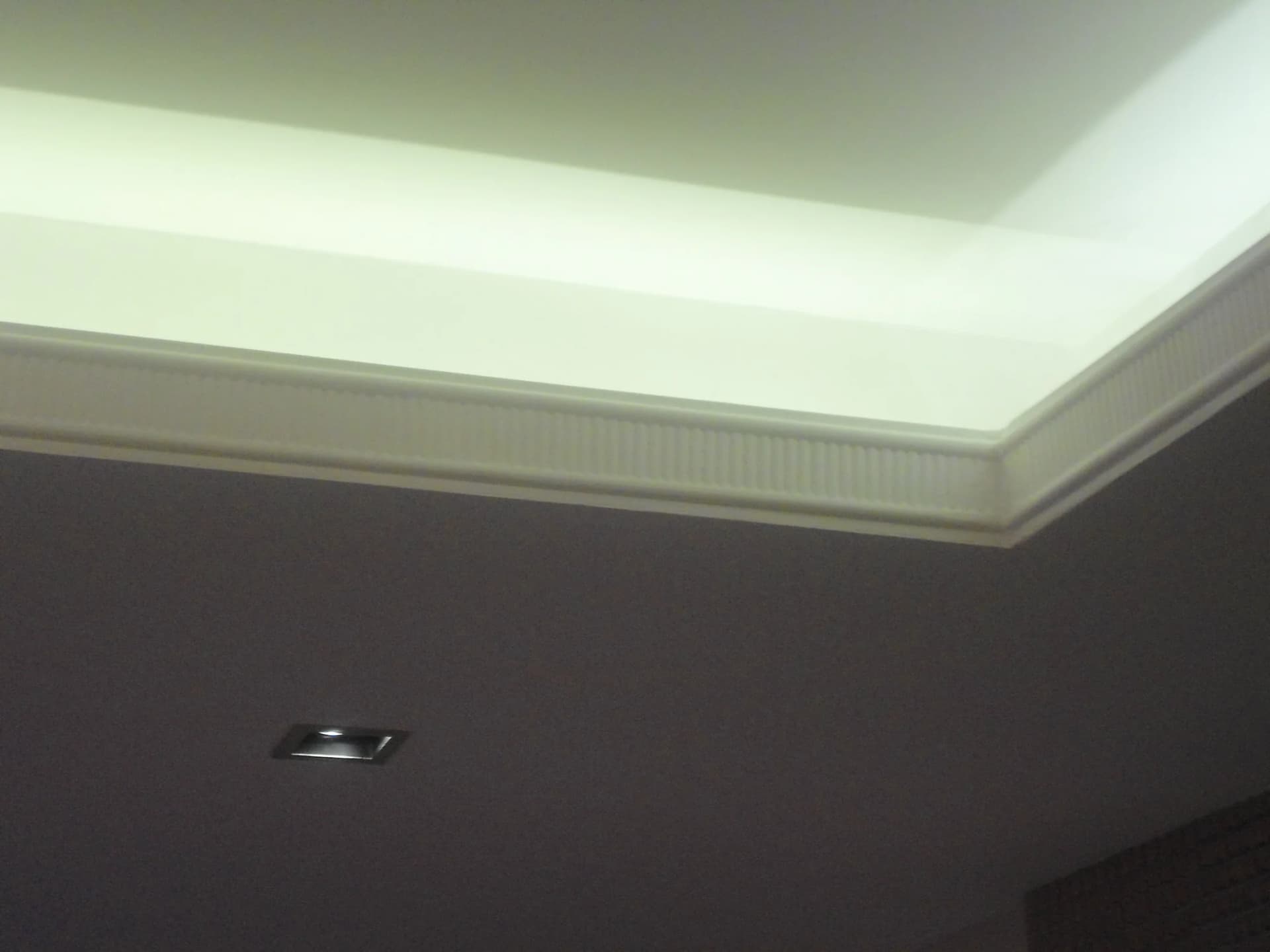
Where an LED strip hides inside the profile, three things matter: the trough is the right size, the material tolerates the heat, and the surface reflects light evenly.
Foam is weak on all three. EPS is heat-sensitive, and sustained contact with higher-output LED strips can yellow and deform the surface over time. Its porous face also scatters light unevenly, so the inside of the trough has to be filled and painted matt white anyway.
Plaster cornice and polyurethane are clearly safer here. With site-cast plaster the trough dimensions can be set freely to suit the design.
Which one, where?
Decide from the use of the room and the life you expect from the detail.
| Situation | Recommended | Why |
|---|---|---|
| Living room, classical profile, cove lighting | Plaster cornice | Crisp detail and heat safety |
| Bedroom, plain slim profile | Polyurethane or plaster | Clean line, low maintenance |
| Rental flat, fast refresh | Foam coving | Speed and cost lead |
| Bathroom, kitchen, enclosed balcony | Polyurethane | Moisture tolerance |
| Commercial space with a fire requirement | Plaster cornice | Gypsum does not burn |
| Home with children, low wall trim | Polyurethane | Impact resistance |
| Older building, weak ceiling surface | Foam or polyurethane | Low weight |
Installation quality outranks material
Whichever material is chosen, the corners decide the result. A mitre cut at the wrong angle, an unfilled joint or a profile bonded to an unsound surface will produce a visible crack within months, even in the most expensive material.
Cleaning the ceiling surface of dust and priming it where needed is the one step that cannot be corrected afterwards.
- Corners must be mitred and joints filled.
- On long runs, joint spacing should be distributed evenly.
- A weak or flaking surface has to be made sound first.
- Every joint must be sanded before painting — otherwise it shows under raking light.
In short
- Plaster cornice is gypsum, foam coving is EPS — they are not two names for one product.
- Foam is light, fast and cheap, and weak against impact, moisture and heat.
- For concealed LED troughs, avoid foam; use plaster cornice or polyurethane.
- In a wet room, polyurethane is the only suitable option of the three.
- Corner joints and surface preparation matter more than the material choice.